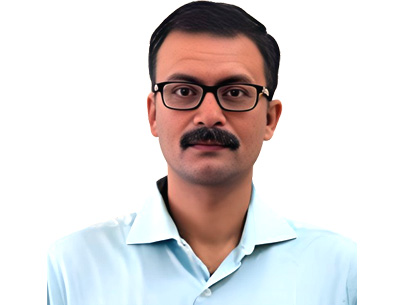
Dr. Abhijit Mustafi

PI & Professor and Head, Computer Science and Engg

Dr. Abhijit Mustafi

Professor and Head, Computer Science and Engg
Ph.D., MCA

Contact Address
Permanent Address Flat No. G3 Block A Anandomani Apartments Jatin Ch. Road Besides Hotel Landmark Lalpur, Ranchi – 834001
Local Address Quarter No. D I/52 Near Hostel 9, Inner Campus, BIT Mesra, Ranchi, Jharkhand
Phone (Office) 4522
Phone Residence
Email Id abhijit@bitmesra.ac.in
Joined Institute on : 01-Aug-2003

  Work Experience
Teaching : 19 YearsResearch : 17 Years
  Professional Background
Worked with CMC, Kolkata, in the capacity of Project Trainee, during which time I had the responsibilty of designing the database schema for a Kolkata Police project, involving traffic violations.
  Research Areas
My current research interest is in the fields of information retrieval from web corpus, dynamic data visualization and blind source separation of images.

I also work in the domain of machine learning, where I study the application of machine learning in the context of computer vision.

  Award and Honours
 Gold Medallist, University of North Bengal, 2001
  Publications
2010

  1. Hameed Al-Qaheri, Abhijit Mustafi, Soumya Banerjee: Digital Watermarking using Ant Colony Optimization in Fractional Fourier Domain. J. Inf. Hiding Multim. Signal Process. 1(3): 179-189 (2010).
  2. Sahana, S.K.,Jain,A and Mustafi,A., 2010. A Comparative Study on Multicast Routing using Dijkstra’s, Prims and Ant Colony Systems. International Journal of Computer Engineering & Technology (IJCET), Vol-2, Number-2, pp. 301-310. ISSN Print: 0976-6367, ISSN Online: ISSN 0976-6375.

2013

  1. A. Mustafi, S.K.Ghorai, “A novel blind source separation technique using fractional Fourier transform for denoising medical images.” Optik, Vol. 124, 2013, pp. 265-271. doi:10.1016/j.ijleo.2011.11.052 (SCI)

2015

  1. Ahmad, Y. A., Mustafi A., “Document Ranking Strategy Enhancement using Paragraph Ranking”, IJAER, 2015
  2. Ahmad, Y. A., Mustafi A., “Real time Duplicate File Detection System”, IJAER, 2015
  3. Basu M., Mustafi A. et al., “An Analytical Neural Network for Arithematic Logic Unit of Microprocessors”, IISRR-IJR, 2015

2019

  1. Mustafi D., Mustafi A., Sahoo G., “A novel approach to text clustering using genetic algorithm based on the nearest neighbour heuristic”, International Journal of Computers & Applications, Taylor and Francis, 2019.
  2.  Ritesh Jha, V. Bhattacharya, Abhijit Mustafi, ” Classification of Big data using Spark Framework ” 5th International    Conference on Nano-electronics, Circuits & Communication Systems (MCCS-2019) ARTTC BSNL Ranchi.(11-13 May 2019).( Accepted paper in press).
  3. Ritesh Jha, V. Bhattacharya, Abhijit Mustafi, ” K-NN classification for Large dataset in Spark  Framework ” 6th International    Conference on Nano-electronics, Circuits & Communication Systems (NCCS-2019) ARTTC BSNL Ranchi.(11-13 Dec. 2019).( Accepted paper in press).
  4. Paikaray D., Mustafi A. (2021) Genetic Algorithm-Based Image Watermarking Using Multiple Location. In: Nath V., Mandal J.K. (eds) Proceedings of the Fourth International Conference on Microelectronics, Computing and Communication Systems. Lecture Notes in Electrical Engineering, vol 673. Springer, Singapore. http://doi-org-443.webvpn.fjmu.edu.cn/10.1007/978-981-15-5546-6_52

2021

  1. Kumari, Rani, and Abhijit Mustafi. “An optimized framework for digital watermarking based on multi-parameterized 2D-FrFT using PSO.” Optik 248 (2021): 168077.

2022

  1. Rathi, R. N., and A. Mustafi. “Designing an efficient unigram keyword detector for documents using Relative Entropy.” Multimedia Tools and Applications 81, no. 26 (2022): 37747-37761.
  2. Kumari, Rani, and Abhijit Mustafi. “The spatial frequency domain designated watermarking framework uses linear blind source separation for intelligent visual signal processing.” Frontiers in Neurorobotics (2022).
  3. Kumari, Chandana, and Abhijit Mustafi. “CTMFSO algorithm-based efficient color image segmentation by fuzzy order entropy.” Multimedia Tools and Applications (2022): 1-14.
  4. Rathi, R. N., and A. Mustafi. “The importance of Term Weighting in semantic understanding of text: A review of techniques.” Multimedia Tools and Applications (2022): 1-23.
  5. Jha, Ritesh, Vandana Bhattacharjee, Abhijit Mustafi, and Sudip Kumar Sahana. “Improved disease diagnosis system for COVID-19 with data refactoring and handling methods.” Frontiers in Psychology 13 (2022).
  6. Jha, Ritesh, Vandana Bhattacharjee, and Abhijit Mustafi. “Increasing the Prediction Accuracy for Thyroid Disease: A Step Towards Better Health for Society.” Wireless Personal Communications 122, no. 2 (2022): 1921-1938.
  7. Jha, Ritesh, Vandana Bhattacharjee, and Abhijit Mustafi. “Transfer Learning with Feature Extraction Modules for Improved Classifier Performance on Medical Image Data.” Scientific Programming 2022 (2022).

2023

  1. Kumari, Chandana, and Abhijit Mustafi. “Efficient Color Image Segmentation of Low Density Range Image Using RCAB-RDMCNN Enhancement Technique and RBSHM Segmentation Algorithm.” Wireless Personal Communications (2023): 1-13.
  2. Mustafi, D., and A. Mustafi. “A differential evolution based algorithm to cluster text corpora using lazy re-evaluation of fringe points.” Multimedia Tools and Applications (2023): 1-25.
  Member of Professional Bodies
 Life member of Institute of Engineers.
  Current Sponsored Projects
  1. PURSE 2022, Special Call from DST, Principal Project Implementor. Total Amount sanctioned: Rs. 28.44 CR
  2. 360-degree Health Monitoring of Miners and Mining Community of CCL, CO-PI, CSR Initiative of CCL, 2022. Total amount sanctioned: Rs. 36 Lacs
  3. “Investigation of document clustering using nature based algorithms in an optimized vector space.” (Internal project sponsered under BIT Seed Money scheme). Total value of Rs. 0.8 Lacs.


RACHEL HPC FACILITY Resource Usage Policy

Policy Overview

Date: 11 March 2026

The Rachel High Performance Computing (HPC) Facility provides shared computational infrastructure to support the research, teaching, and scholarly activities of the institution. To ensure equitable access and the efficient utilization of these resources, all registered users are required to read, understand, and comply with the provisions set out in this Policy. These guidelines are effective immediately upon account activation and apply to all submitted workloads, stored data, and system interactions.

ParameterLimit / Requirement
Maximum Job Runtime120 hours (5 consecutive days)
Per-User Storage Quota150 GB (unauthorised use prohibited)
Job MonitoringUser's ongoing responsibility
Storage MaintenancePeriodic review & cleanup required
Non-Compliance ActionJob termination / access suspension

Job Runtime Limit

No user shall be permitted to execute any computational job on the Rachel HPC cluster for a continuous period exceeding total 120 hours (CPU-5 consecutive days or GPU-3 consecutive days). Jobs that approach or exceed this threshold will be subject to administrative intervention, including automatic or manual termination, to preserve system availability for all users.

Users requiring extended runtime beyond the standard limit must submit a written request to the System Administrator prior to job submission, providing scientific justification and an estimated resource budget.

Storage Utilization Limit

Individual users shall not utilize more than total 150 GB (for CPU nCPU-12 Core & for GPU nGPU-6 Core) of storage on the Rachel HPC system without prior written authorization from the System Administration team. This quota encompasses all personal directories, project workspace, and temporary scratch areas associated with the user account.

The following storage hygiene practices are mandatory:

  • Removal of completed job output files that are no longer required for active analysis.
  • Deletion of temporary, intermediate, and scratch files upon job completion.
  • Regular archival of results to institutional long-term storage systems.
  • Prompt response to storage-usage alerts issued by System Administration.

Fair Resource Usage

All users are expected to exercise good judgement in their use of Rachel HPC resources. Users shall not monopolies CPUs, memory, network bandwidth, or storage in a manner that disrupts or prevents other researchers, faculty members, or students from accessing the facility.

Submitting large numbers of simultaneous jobs that saturate the scheduler queue without scientific necessity, or deliberately circumventing resource allocation controls, constitutes a violation of this Policy.

Job Monitoring Responsibility

Users bear full responsibility for monitoring all jobs they submit to the Rachel HPC scheduler. This responsibility includes:

  • Regularly checking job status, output logs, and resource-consumption metrics.
  • Promptly terminating any job found to be stalled, malfunctioning, or producing incorrect results.
  • Ensuring that submitted jobs do not run beyond their stated resource requirements.

Users who are unable to actively monitor a job due to absence or other commitments should make arrangements for a designated colleague to assume monitoring responsibility, or should limit job scope accordingly.

Storage Maintenance

Users shall periodically review their allocated storage space and proactively remove unnecessary files, redundant datasets, temporary data, and intermediate outputs. Maintaining adequate free capacity on the Rachel HPC storage systems is a shared responsibility that directly impacts the productivity of all users.

System Administration may issue storage-usage warnings when a user's allocation approaches the permitted quota. Users are expected to respond to such warnings within five (5) working days by reducing their storage footprint to within the authorized limit.

Policy Compliance

All users of the Rachel HPC facility are required to comply with the provisions of this Policy as a condition of continued access. Compliance is the personal responsibility of every account holder.

  Non-Compliance & Administrative Authority Failure to comply with any provision of this Policy may result in the immediate termination of running jobs, restriction of computational resource allocations, or temporary suspension of access privileges to the Rachel HPC facility. The System Administrator reserves the right to terminate any user process deemed to be making undue or excessive use of system resources, without prior notice, in order to maintain overall system stability and equitable access for all users.


Signature of HOD (CSE)